
How Small Firms compete with Large AI-Integrated Studios
Most small architecture firms can feel the gap with big, AI-heavy studios: tighter fees, faster turnarounds, clients expecting “more for less.” Data backs that up. Between 2015 and 2023, the share of national billings generated by smaller US firms fell by half, while large firms’ share grew by about 40%.The American Institute of Architects At the same time, roughly 61% of large firms report using AI in day-to-day work, compared with just 27% of small firms.The American Institute of Architects
The good news: the barrier isn’t a lack of interest, it’s preparation.
Recent AIA research shows only 6% of architects regularly use AI, and only 8% of firms have implemented AI solutions, even though 84% believe AI could help automate manual tasks and 74% believe it could support product research.The American Institute of Architects Monograph’s 2025 survey frames it clearly: 78% of architects want AI, but only 8% actually use it, largely because their workflows and data aren’t ready.Monograph
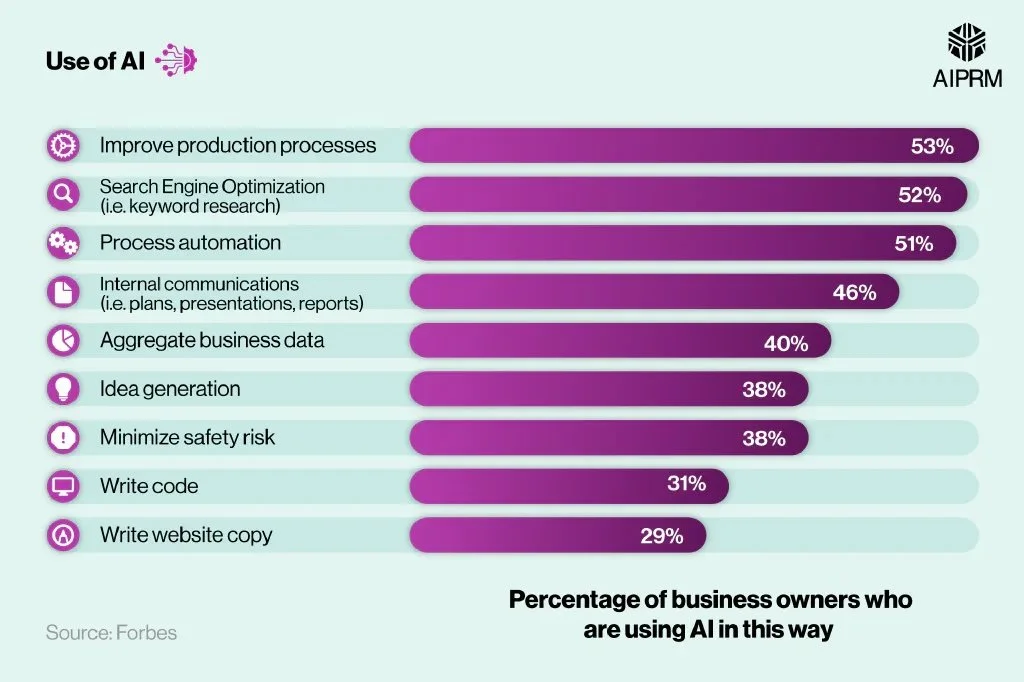
Business owners who are Using AI
At DLO Creative Lab, we see the same pattern: the firms winning with AI aren’t necessarily more “technical”—they’re more intentional. They fix strategy, culture, and workflows before they pick tools.
Below is a practical, non-technical roadmap you can use to prepare your small firm to compete with large AI-integrated studios.
1. Define why you want AI before you decide what to use
Jumping straight into tools (“Which AI app should we buy?”) is the fastest route to wasted subscriptions.
Start by framing 3–5 business problems, not software features. For example:
“We lose too many hours to admin and can’t bill them.”
“We’re slow at early design options compared to bigger competitors.”
“Principals can’t see project risk early enough.”
“Younger staff are stuck redlining instead of learning design.”
Research from AIA and its partners shows that architects are most optimistic about AI for automating manual tasks and supporting product research—not replacing design itself.The American Institute of Architects That aligns perfectly with small-firm pain points like:
Writing repetitive emails and proposals
Cleaning drawings and models
Tracking hours, fees, and budgets across tools
Non-technical step: Write a one-page “AI Intent Brief”:
Top 3 pain points AI should address
Who benefits most (principals, PMs, designers, admin)
What “success” looks like (e.g., “reduce admin time by 20% in 6 months”)
This becomes your filter so you don’t chase shiny tools that don’t move the needle.
2. Clean up your data and workflows (before you add AI)
Almost every successful AI case study in small firms starts with one thing: organized information.
Monograph’s analysis of small and mid-sized practices shows most are juggling a mix of Revit files, Excel budgets, email chains, and ad-hoc project management tools. AI layered on top of that “spreadsheet chaos” can’t do much.Monograph
Meanwhile, Deltek’s 2025 study found that 82% of UK-based architecture firms plan to ramp up AI investment, and 88% believe AI will help expand their services—but only when financials, resourcing, and project status live together in structured systems.Deltek
Non-technical step: Build an “AI-ready” backbone:
Standardize project naming and folder structure across the firm
Consolidate where possible (e.g., one main project management system instead of four spreadsheets)
Agree on one source of truth for:
Fees & budgets
Time tracking
Project phases & milestones
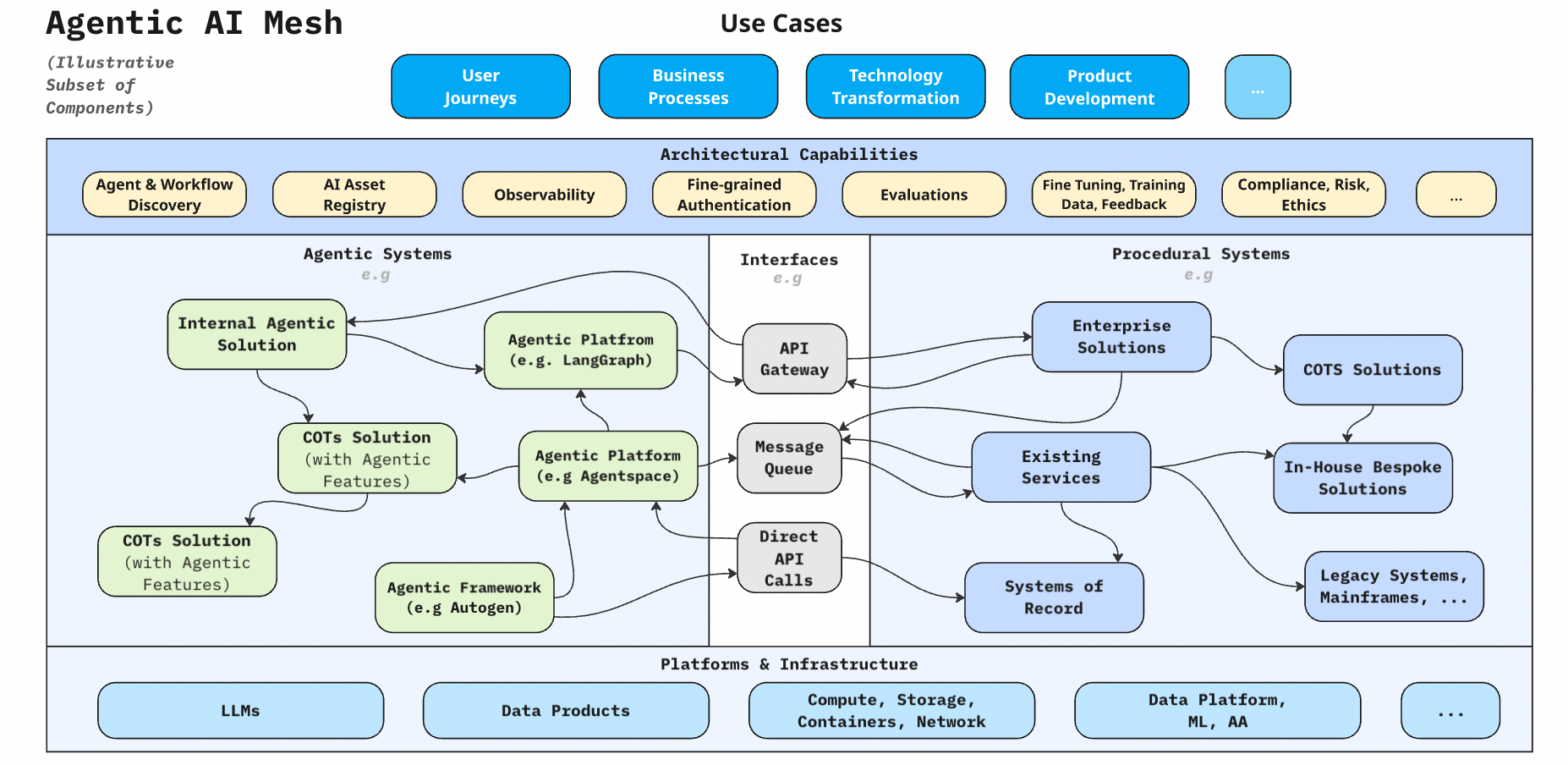
Use Cases
You don’t need custom code; you need consistent habits. Think of this as pouring the concrete slab before you start framing your AI “extension.”
3. Create an AI culture, not just an AI tool
The biggest barriers architects report around AI aren’t technical—they’re about trust, risk, and skills.
AIA’s 2025 report on AI adoption highlights that nearly 90% of architectural professionals are concerned about accuracy, unintended consequences, security, authenticity, and transparency in AI outputs.The American Institute of Architects In other words: people are nervous—for good reasons.
At the same time, research on small firms in Turin, Italy, shows that generative AI can enhance efficiency and creativity in early design phases if humans remain in the loop to address legal, regulatory, and project-specific constraints.Technology | Architecture + Design
Non-technical step: Build light-weight AI governance that people actually read
Name an AI Champion
Not your IT vendor—someone inside your practice (associate, PM, design-tech lead) who cares about both design and process.

Draft a 2-page “AI Use Playbook” that covers:
Where AI is allowed (brainstorming, first drafts, code checks, schedules, feasibility summaries)
Where AI is never used alone (life safety, final code compliance interpretations, contract language, sealed drawings)
How to handle client data (no sensitive info into public tools; use approved, secure platforms only)
Normalize “human in the loop”
Make it explicit: AI produces drafts; architects remain responsible for judgment, ethics, and compliance.
This kind of cultural clarity reduces fear and gives your team permission to experiment safely.
4. Start with focused pilots and measurable wins
McKinsey estimates that generative AI could add $2.6–$4.4 trillion in annual value across industries by improving productivity—but only when organizations redesign workflows and talent around it, not when they tack AI on as a gadget.McKinsey & Company
For small architecture firms, the most realistic path is tiny, well-scoped pilots that prove ROI in a few weeks, not years.
Based on industry research and case studies from small practices,Monograph+1 good first pilots include:
Admin & project communication
Drafting meeting minutes and action items
Summarizing email threads into to-do lists
Creating first-pass fee proposals from a template
Design support (not design replacement)
Generating early massing options or diagrams from constraints
Producing quick visualization variations for client options
Project management
Drafting schedule baselines from past projects
Automatically flagging time/budget anomalies from timesheets
Non-technical step: Use a simple pilot template
For each pilot:
Owner: Who is responsible?
Scope: e.g., “Use AI to draft all project meeting minutes this month.”
Metrics: time saved per week, fewer overdue tasks, faster client approvals, etc.
Retrospective: 30-minute debrief at the end—keep, change, or kill?
This avoids “random AI experiments” and builds a clear internal story you can later share with clients (“We cut admin time by ~30% without reducing quality”).
5. Leverage your size: partner, don’t replicate
You don’t have to match big-studio infrastructure to compete with them.
Recent AIA firm data shows that while smaller firms are the majority of practices (around 75% of US architecture firms have fewer than 10 employees), large firms now capture a much larger share of billings and are more likely to be using AI day-to-day.The American Institute of Architects At the same time, tools and platforms are explicitly targeting small practices with AI-enabled project management, billing, and resource planning.Monograph+1
Non-technical ways to “borrow scale” instead of building it:
Vendor partnerships
Choose tools built specifically for A/E workflows rather than generic business apps, so your team doesn’t have to translate everything into architecture language.Monograph+1
Peer networks
Join small-firm exchanges, local AIA technology committees, or online communities focused on AI in practice. Many share templates, policies, and lessons from failed pilots so you don’t repeat them.

Consultants (like DLO Creative Lab)
Treat AI integration like a phased project: discovery, concept, pilot, scaling.
Bring in outside help to map your current workflows, identify “AI-ready” areas, and train internal champions, rather than buying tools and hoping people adopt them.
Here, your small size is an advantage: you can test, change course, and standardize in months—not years.
Bringing it all together
If you’re a small architecture firm, the goal isn’t to become a tech company—it’s to design better work, with less friction, in a market where large AI-powered studios are already moving.
Current research paints a clear picture:
Interest in AI is high, but actual adoption remains low—especially in smaller firms.The American Institute of Architects+1
Large firms are capturing more billings and using AI more frequently in day-to-day practice.The American Institute of Architects
When small firms do integrate AI, it enhances efficiency and creativity in early design and admin tasks, as long as humans stay in control of complex, contextual decisions.Technology | Architecture + Design
The firms that will thrive aren’t the ones with the most plugins; they’re the ones that:
Get crystal clear on why they want AI
Organize their data and workflows
Build a culture that understands AI’s risks and benefits
Run small, measurable pilots
Partner strategically to “borrow” scale
If you’d like help mapping these steps to your own studio—process by process, project by project—this is exactly the kind of roadmap we build at DLO Creative Lab.
References
American Institute of Architects. Artificial Intelligence Adoption in Architecture Firms: Opportunities & Risks (press release, March 11, 2025).The American Institute of Architects
American Institute of Architects. The latest insights from the 2024 Firm Survey Report (November 4, 2024).The American Institute of Architects
Robert Yuen. “AI for Architects: Improve Projects & Reclaim Design Time.” Monograph Blog (updated November 20, 2025).Monograph
Neil Davidson. “Designing with Intelligence: 5 Ways AI Can Elevate Architecture Firms.” Deltek Project Nation Blog (June 24, 2025).Deltek
Federica Joe Gardella et al. “The Impact of AI on Small Architecture Firms.” Technology | Architecture + Design (TAD Journal), Issue 9.1, 2025.Technology | Architecture + Design
McKinsey & Company. The economic potential of generative AI: The next productivity frontier (2023).McKinsey & Company